

No-Ticket Resolutions Aren’t a Feature. They’re a Standard.
Ask anyone in telecom ops what a “normal day” looks like — and you’ll hear a familiar chorus:
“Raise a ticket.”
“Escalate to Level 2.”
“Wait for provisioning.”
“Follow up. Again.”
It’s a system built on slowness disguised as structure.
But here’s the real question: Why is this still normal?
In every other industry, operational friction is a red flag.
In telecom, it’s been institutionalized.
The default assumption is: issues mean tickets.
The better the support? The faster the resolution.
But… what if the real innovation isn’t speed after failure — it’s not needing tickets at all?
Ticket Culture: A System That Rewards the Symptom, Not the Solution
Let’s call it what it is — the legacy BSS model was never built to prevent issues.
It was built to log, route, and resolve them after they’ve already disrupted service.
Which means:
- Customers wait.
- Ops scramble.
- Data gets buried in tickets.
- “Support” becomes a full-time crisis management job.
You’re not solving problems.
You’re choreographing them.
Every ticket closed is a pat on the back.
But every ticket raised is a silent tax on your platform.
What If “Support” Wasn’t a Department — But a System That Rarely Gets Triggered?
At TelcoEdge, we didn’t ask how we could make ticket resolution faster.
We asked how we could make ticket creation unnecessary.
What if ops didn’t need to manually escalate provisioning failures?
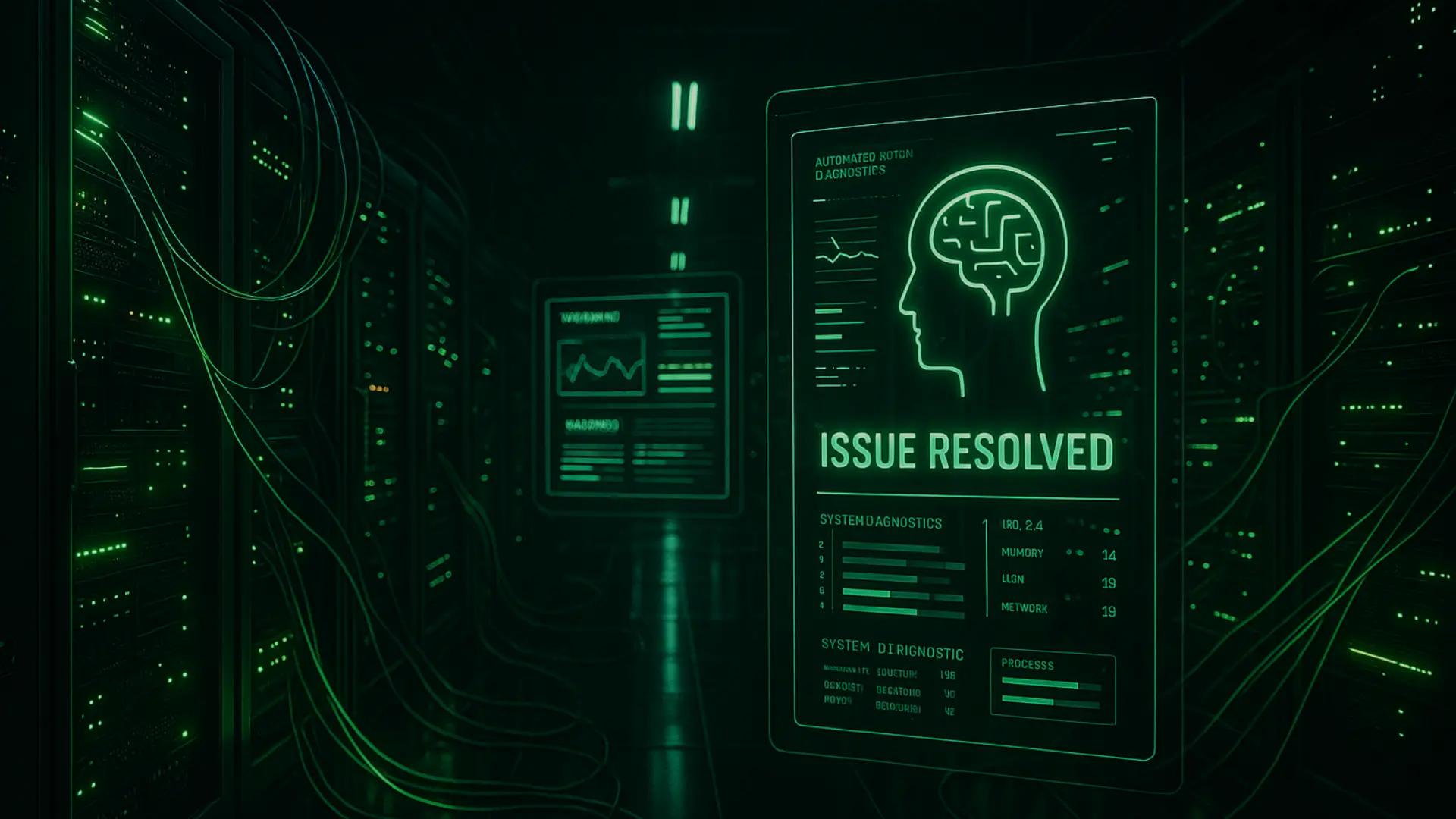
What if diagnostics triggered before a user ever hit submit?
What if support teams had visibility so sharp, they barely needed to act?
That’s not fantasy. That’s our product standard.
Because support should be your last line, not your first.
The Stack That Solves Silently
Here’s what we built — not as features, but as defaults:
Self-Healing Flows
Our stack identifies routine failures and self-resolves them without intervention.
Proactive Monitoring as Baseline
Before an end user hits trouble, our system’s already sent an alert — and usually, a fix.
Zero-Interrupt Provisioning
Most provisioning flows are linear and fragile. Ours? Parallel, fault-tolerant, and built to auto-correct.
Support-as-AI, Not As a Queue
When support does get triggered, it’s AI-first. Our ops don’t waste time on copy-paste resolutions.
This isn’t about “reducing load.”
It’s about building a stack where support is optional — not essential.
No-Ticket Doesn’t Mean No-Control
Let’s be clear — removing tickets doesn’t mean removing accountability.
In fact, it creates more.
Because when your backend stops hiding issues behind ticket IDs,
you actually get **clarity on what’s breaking, where, and why.
And when ops stop logging issues manually, they start building workflows that learn and adapt.
You don’t just have faster ops.
You have smarter systems.
Ticketless Isn’t a Dream. It’s a Default.
We’re no longer asking telcos to choose between speed and reliability.
We’re saying: if your platform still runs on tickets, it’s already behind.
Because in a truly intelligent backend:
- A spike gets resolved before the user feels it
- A failed provisioning call never hits human hands
- A support ticket? Becomes a rare anomaly, not a daily norm
And when that’s the baseline — your ops don’t just keep the engine running.
They start fine-tuning it for scale, growth, and excellence.
That’s the TelcoEdge difference.
We don’t chase support metrics.
We eliminate the need for them.