

How silent degradation — not outages — is becoming the biggest operational risk in 2026 networks
For most of telecom history, failure was obvious.
A site went down.
Traffic dropped.
Customers complained.
Teams responded.
That mental model no longer holds.
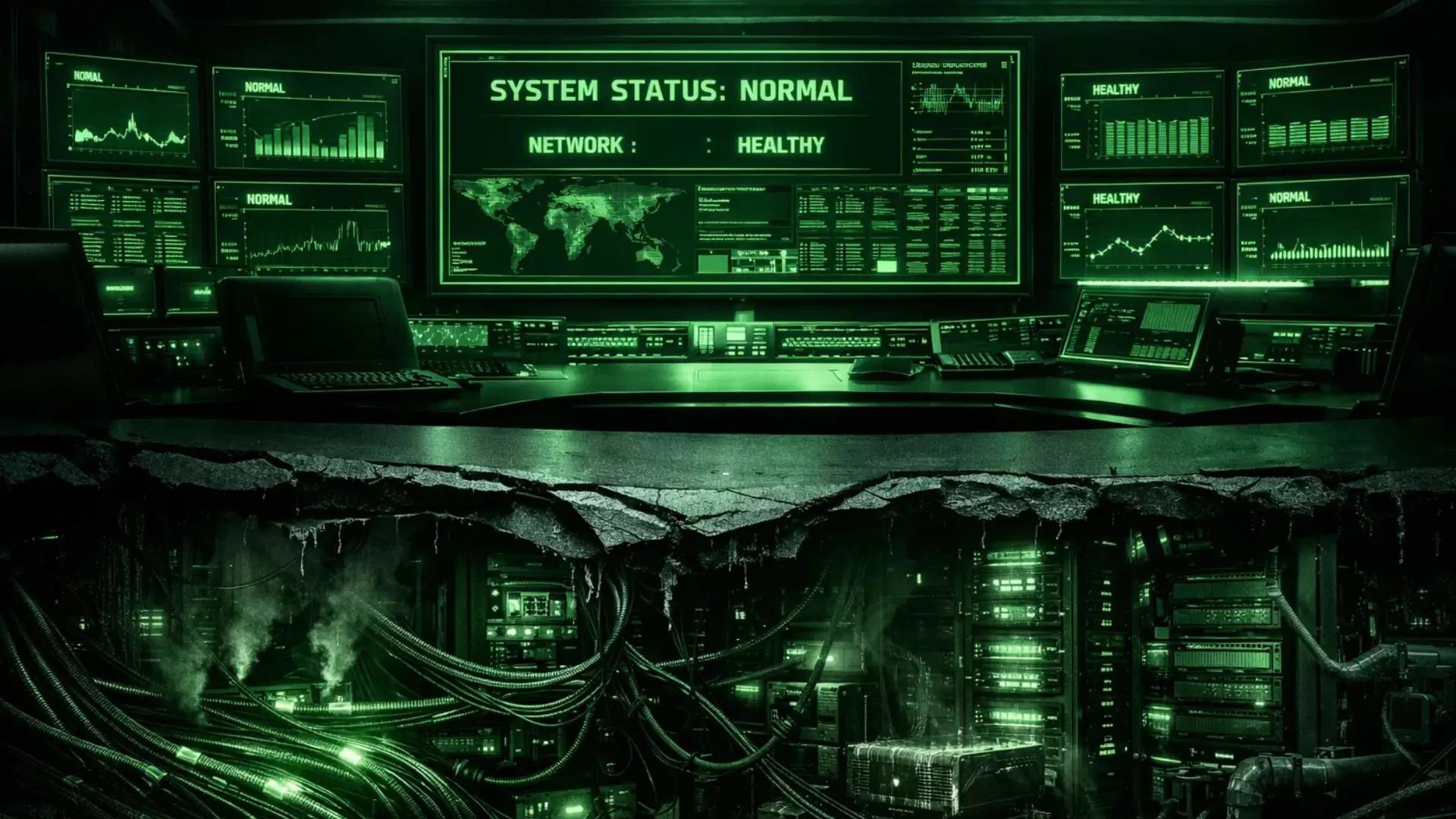
Modern telecom networks rarely fail loudly. Systems stay “up.” Dashboards remain green. SLAs appear intact. And yet margins erode, customer experience degrades, and operational cost climbs without a clear trigger.
This is the new failure mode of telecom: systems that technically work, but economically and operationally drift.
These silent telecom failures are becoming one of the hardest problems operators face as networks scale.
Why Traditional Failure Signals No Longer Apply
In legacy networks, failure was tightly coupled to disruption. When something broke, services stopped.
In cloud-native, AI-assisted, always-on environments, the opposite is often true.
Modern networks are designed to degrade gracefully. Latency increases incrementally. Energy consumption creeps upward. Automation compensates silently. Cost absorbs the impact.
From the outside, everything looks stable.
From the inside, inefficiency accumulates.
This is why many operators now face a paradox: higher availability alongside declining margins. a direct result of network efficiency vs availability being misaligned.
The network isn’t failing. The system is.
The Rise of Operational Drift
Operational drift occurs when automated systems continue to meet surface-level performance targets while underlying efficiency deteriorates.
AI may route traffic correctly while consuming more compute than necessary. Redundant paths may keep sessions alive while energy usage quietly doubles. Self-healing logic may mask faults without resolving root causes.
Each decision looks reasonable in isolation.
At scale, their combined effect becomes expensive.
Drift rarely triggers alarms because nothing is technically “wrong.” It becomes visible only when finance, operations, and experience metrics start diverging — often too late to correct cheaply. This operational drift in telecom networks is now a primary driver of margin pressure.
When Automation Hides Problems Instead of Solving Them
Automation was designed to reduce human intervention, and it succeeds at that.
But when systems automate without explicit boundaries, they also remove the friction that once surfaced issues early.
An autonomous network can reroute traffic indefinitely, absorb congestion through compute, and preserve uptime at almost any cost. What it does not do by default is ask whether the action remains efficient, justified, or economically sound.
Without constraints, automation optimizes for continuity — not sustainability. This is the core telecom automation risk many operators underestimate.
And this is how networks stay stable while economics quietly collapse.
(Automation only reduces cost when it’s designed to expose inefficiency, not quietly absorb it.)
Why Always-On Architectures Are Becoming a Liability
Always-on architectures were built for reliability. They were not designed for efficiency under variable demand.
As networks densify and edge compute expands, keeping everything active all the time becomes unsustainable. The problem is not uptime. It is persistence.
When systems fail to scale down intelligently, they burn energy during low-value periods, consume compute without purpose, and inflate baseline Opex regardless of demand. This always-on network inefficiency compounds silently over time.
Over time, networks become reliable but rigid — and rigidity is expensive.
What Modern Telecom Failures Look Like in Practice
The most damaging failures today do not trigger incidents. They appear as patterns.
Energy costs rise faster than traffic growth. Latency varies despite high availability. SLAs remain compliant while customer dissatisfaction increases. Automation adds complexity instead of reducing it.
None of these are outages.
All of them contribute directly to telecom margin erosion.
This is why many operators feel they are “doing everything right” while outcomes quietly deteriorate.
Why Observability Alone Isn’t Enough
Modern networks are highly observable. Telemetry is abundant.
The issue is not visibility. It is interpretation.
Dashboards show what is happening, but rarely explain why a decision occurred, whether it was optimal, what alternatives were rejected, or how cost, energy, and experience were traded off.
Without that context, teams react to symptoms instead of causes. Systems remain operational, but learning stalls—allowing silent telecom failures to persist.
( Visibility explains what happened; governance explains whether it should have happened at all.)
Redefining What “Healthy” Means
To avoid silent failure, operators must rethink how they define health.
Health is no longer measured by uptime alone, throughput alone, or SLA compliance alone.
It now includes predictable system behavior, controlled automation boundaries, measurable efficiency per transaction, and decisions that remain explainable after the fact.
This shift is not about slowing networks down.
It is about making system behavior defensible, repeatable, and economically sound at scale—rebalancing network efficiency vs availability.
Why This Is a Leadership Problem
Silent failures persist because no single team owns them.
Network teams see availability. AI teams see model performance. Finance sees rising costs. Experience teams see gradual churn.
Each team optimizes locally. The system drifts globally.
Correcting this requires leadership to ask different questions: which decisions are automated today, what constraints guide them, what costs they implicitly accept, and which outcomes are non-negotiable.
Until those questions are answered, scale will remain fragile.
The TelcoEdge Perspective
At TelcoEdge, we believe the next generation of telecom advantage will not come from faster networks or more automation alone.
It will come from systems that know when not to act — not just how to act.
The hardest failures to fix are not outages. They are systems that quietly succeed while slowly becoming unsustainable.
In 2026, the strongest networks will not be the ones that never fail. They will be the ones that fail visibly, learn continuously, and correct early — before success turns into erosion.
Key Takeaway
Modern telecom failures don’t look like breakdowns.
They look like stability without efficiency, automation without limits, and growth without control.
Recognizing that is the first step toward building systems that truly scale.